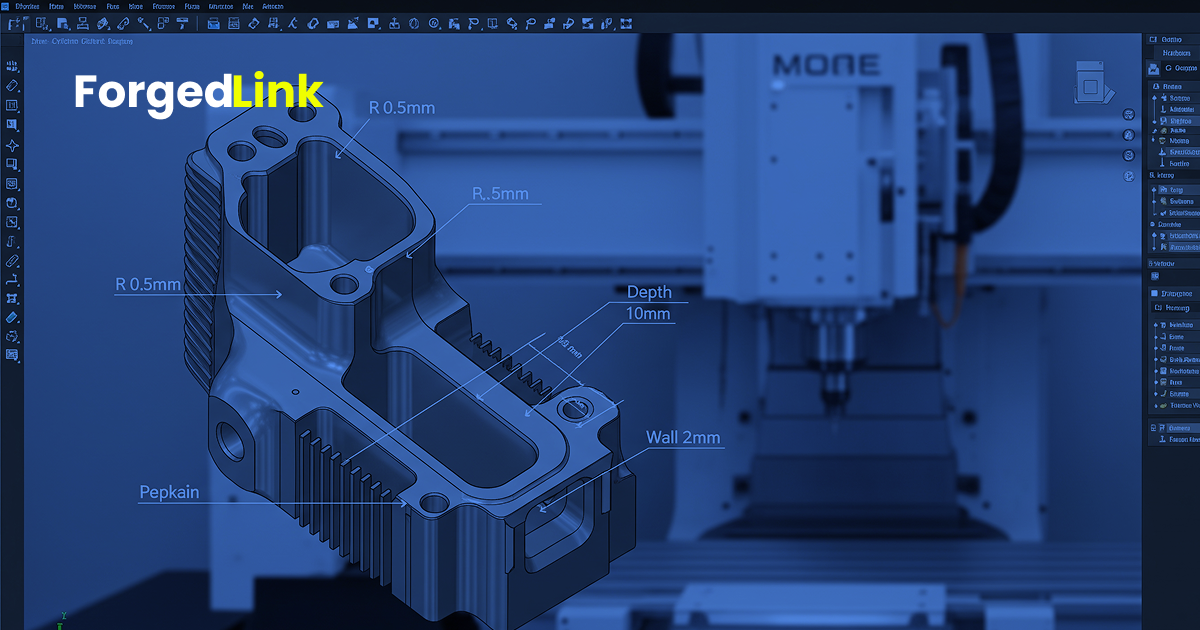
Creating designs optimized for CNC machining is essential for engineers and product developers looking to reduce cost, avoid production delays, and ensure precision. Understanding manufacturability before sending your part to a supplier can save time and resources.
Why Design for CNC Machining Matters
Designing a part without considering machining constraints can lead to:
- Parts that are impossible or costly to manufacture.
- Increased machining time due to complex geometries.
- Higher risk of errors, rework, or scrap.
- Tool wear and potential damage to equipment.
Following CNC design best practices ensures your designs are production-ready and reduces the back-and-forth with suppliers.
Material Selection and Its Impact
The material you choose affects machining strategy, cost, and lead time. Consider these points:
- Machinability: Some metals, like aluminium, are easier to machine than stainless steel or titanium.
- Tool Wear: Harder materials increase tool wear and production time.
- Thermal Properties: Materials that expand or contract significantly require tighter tolerances in design.
- Surface Finish Requirements: Some finishes require secondary operations which impact cost.
Tolerances and Geometry
Precision is critical in CNC machining. Key tips for tolerances and geometry:
- Design features that are achievable with standard tooling.
- Use fillets instead of sharp internal corners where possible.
- Define tolerances realistically; overly tight tolerances increase cost.
- Consider tool access for holes, pockets, and complex surfaces.
Minimizing Complexity
Complex designs increase both cost and lead time. To simplify:
- Reduce unnecessary features or intricate patterns.
- Standardize hole sizes and thread types where possible.
- Group similar features together to reduce setup changes.
- Design for the fewest possible machining operations.
Design Verification and Pre-Build Checks
Before sending your part to a manufacturer, run these checks:
- Verify that every feature can be machined with available tools.
- Check wall thicknesses for structural integrity.
- Ensure tolerances and fits align with functional requirements.
- Compare with existing machining guidelines for similar parts.
These checks help prevent costly mistakes and rework once production starts.
Planning for CNC vs 3D Printing
Some parts may also be suitable for additive manufacturing. When considering options:
- Complex geometries with internal channels may benefit from 3D printing.
- High-volume, simple parts are often more cost-effective via CNC.
- Material availability and finish requirements can influence the choice.
- Lead times and post-processing requirements vary between methods.
Learn more about process selection in our CNC vs 3D Printing guide.
Final Tips for Manufacturable Designs
- Keep designs simple and functional.
- Prioritize material and tool accessibility.
- Balance precision with cost-effectiveness.
- Run pre-build verification before sending to suppliers.
Next Step: Validate your part before production with ForgedLink’s Pre-Build Intelligence — check manufacturability, process, lead time, and supplier suitability in one step.